Research
I’m a researcher in sound and AI, working on voice technology. I’m currently a Research Scientist at Supertone, where I maintain and develop our voice backbone, NANSY, used for text-to-speech and voice transformation. Previously I was at IRCAM, where I completed my doctoral thesis on neural voice transformation. My work centres on controllable and interpretable generative models for voice, music and sound.
Research interests
- Controllable and interpretable generative models
- Self-supervised representation learning
- Neural audio/speech codecs
- Music applications: MIR, singing voice synthesis, music generation models
- Speech applications: TTS, VC, ASR
Previous research projects
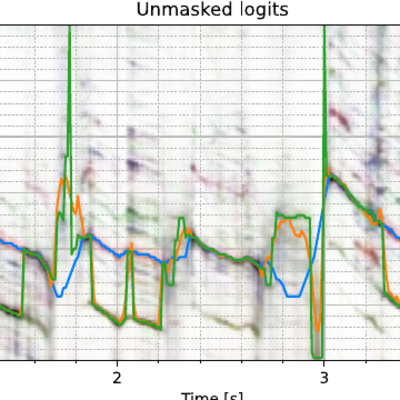
Self-supervised pitch & subharmonic detection
Self-supervised estimation of pitch with explicit modeling of subharmonics and structural noise (jitter and shimmer). It allows editing of rough voice and is used in Supertone’s pitch drawing tool.
- Abstract: ISMIR 2025 late-breaking demo
- Open dataset: rough-voice-eval-set-vctk
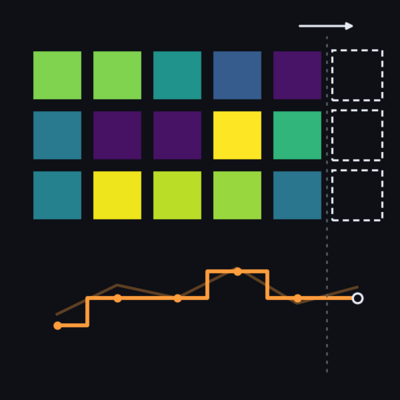
NANSY tokenizer for autoregressive TTS
A tokenizer built on our NANSY voice backbone that produces discrete linguistic codes together with a discretizable pitch contour. This gives us a compact, variable-frame-rate speech codec, independent of speaker-timbre, which we can use in AR TTS systems.
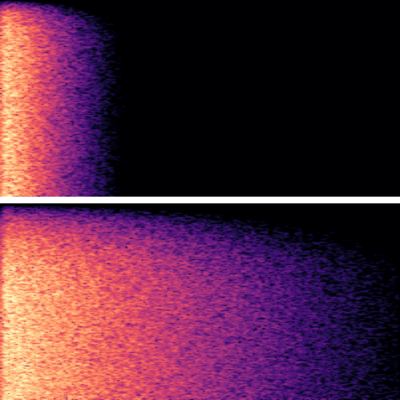
Self-supervised room acoustics estimation & transformation
Self-supervised modeling of the room acoustics in a voice recording, within the NANSY framework.
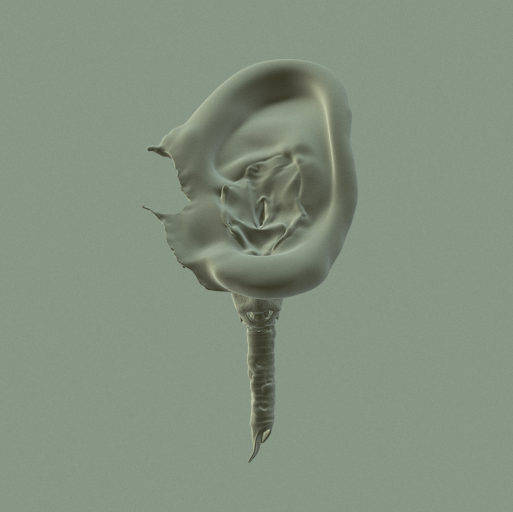
Doctoral thesis
My PhD at IRCAM — A neural voice transformation framework for modification of pitch and intensity — the framework that ties the topics below together.
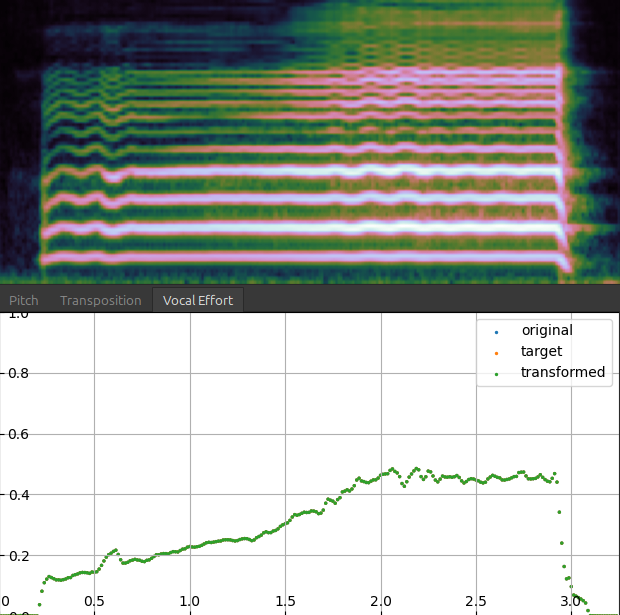
Voice level estimation
Estimation and transformation of the perceived voice level — vocal effort, intensity and musical dynamics — in the singing voice.
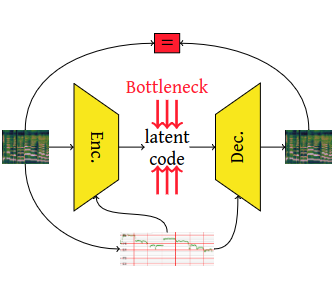
Bottleneck auto-encoder
Neural auto-encoders with an information bottleneck that learn disentangled representations of the voice, enabling controllable transformation of pitch and intensity. The core of my thesis and the basis of CIRCE.
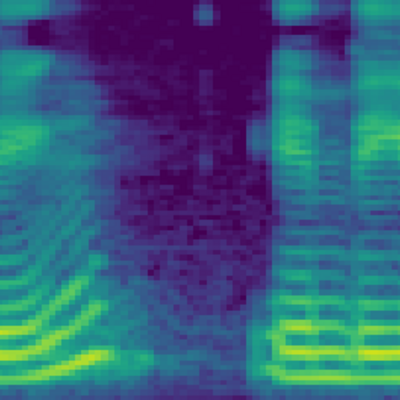
Neural vocoder (MBExWN)
High-quality neural vocoding for singing and speaking voice with the MultiBand Excited WaveNet (MBExWN).
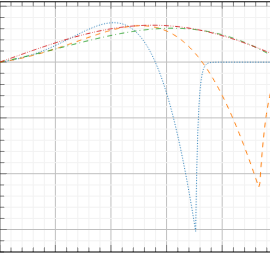
Glottal source estimation
Semi-supervised estimation of glottal flow signals and of the closure instants in neural analysis–synthesis of the voice.
- Paper: Glottal closure instant extraction (EUSIPCO 2020) · ArXiv
- Code: asdfg
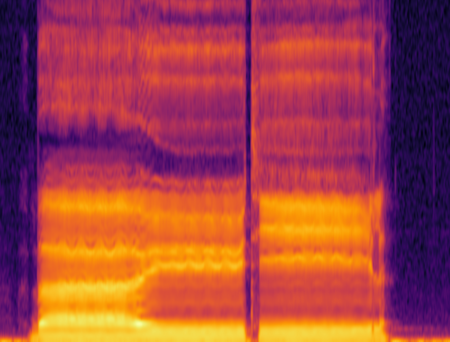
Auto-regressive spectral envelope prediction
My first paper: deep-learning methods for the auto-regressive prediction of spectral envelopes in singing synthesis.